
6 Creative Stages of Design for Branding
6 Creative Stages of Design for Branding The article presents the overview of a design process for branding goals: read about logo, mascots, corporate identity and other steps to promote brands effectively.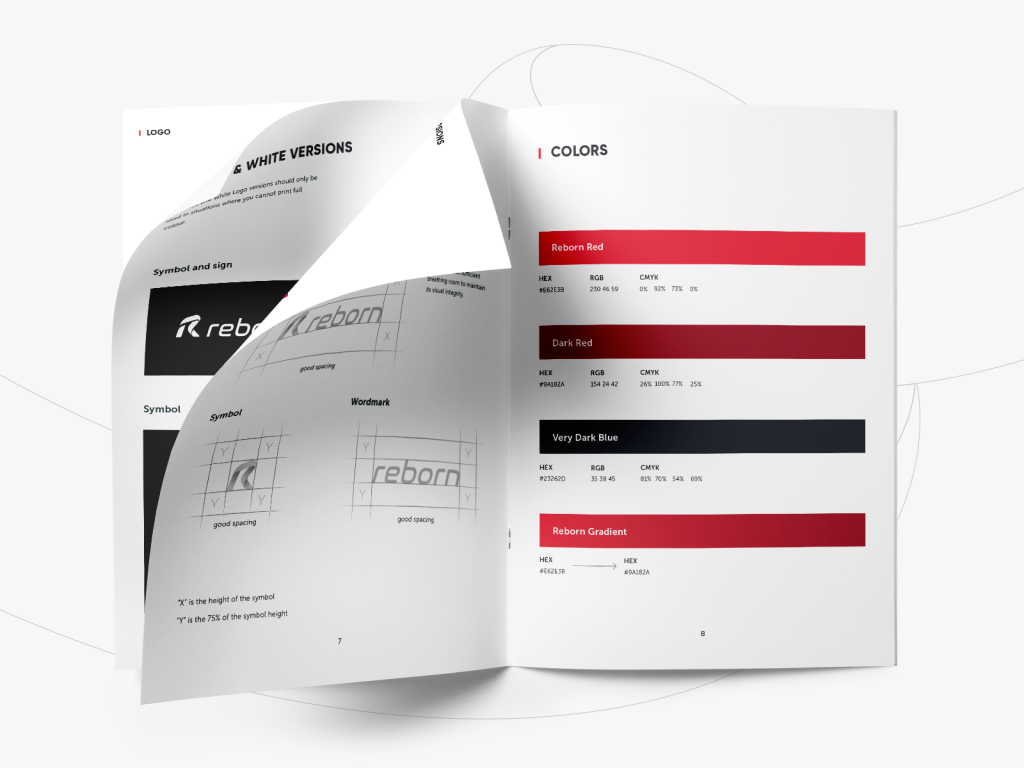
Today competition among businesses is rather sharp. To stand out from the crowd, a company needs to be unique and recognizable by customers. A strong brand is what stands behind each successful product. Nielsen’s Global New Product Innovation Survey discovered that nearly 59% of people prefer to buy new products from brands familiar to them, and 21% say they are ready to purchase a product if it comes from a brand they like.
Some people got used to thinking that only marketing specialists do all the job in branding. However, if you say it to professional designers, they’ll tell you how wrong you are. As an American graphic designer, Paul Rand said: «Design is the silent ambassador of your brand.» The article discusses the essence of branding and the role of design in it. Also, we’ll define the key stages of effective brand creation.
What is branding?
Lately, the word “brand” has been commonly used as some trendy thing, especially in the fashion industry, so many people forget its true essence. According to BusinessDictionary, a brand is a unique design, sign, symbol, words, or a combination of these, employed in creating an image that identifies a product and differentiates it from its competitors. In other words, a brand is a visual representation that people correlate with a company or a product. An effective brand identity is one that customers associate with a high level of credibility and quality.
However, powerful branding depends not only on aesthetic features of brand elements but on the details such as message and emotional appeal standing behind it. To create a proper brand identity, designers need to get deep into the details about business goals as well as do research on the market and its target audience. Here we’ve divided a branding process into six essential stages which designers need to go through on the way of brand creation.

The creative process of branding design for Andre
Stage 1. Business goals and brand personality
Of course, it’s not a designer who sets a company’s goals or defines its personality, but it is a foundation for all branding processes. To achieve the expected results, the company has to set priorities and values at the outset so that the branding team knows which way to go. They do not necessarily need to be defined and used throughout the entire lifecycle of the brand. The goals can be modified later during a creative process, but it’s vital to have some directives in the beginning.
Moreover, before designers start working on a visual part, they need to identify the character that the company or product wants to present. Designing a brand without this knowledge is like drawing a portrait from a photograph. You can do the copy quite right but the work won’t have an emotion in it. The same is with branding. If the clients didn’t provide a designer with a description of their company, it’s a good idea to ask for one. For example, designers can ask customers to make a list of 4-5 keywords describing their business, or at least what they want a company to be.
Practice shows that not all clients come to designers prepared. They may not think of details and ask only for an attractive visual presentation that will bring success to their business. There is nothing remarkable about it. Clients often see designers like artists creating beautiful pictures and you can’t expect them to know all the peculiarities of designers’ workflow.
In one of our previous articles, we’ve mentioned the role of psychology in design. It can be quite helpful on the way of understanding users’ behavior and their possible reactions to the design. Moreover, psychology principles can help designers establish effective communication with clients. There are many customers who are not certain about their desires and preferences and that’s when psychology assists. If a designer finds proper questions to ask, it will be easier to create a guide based on the client’s wish.
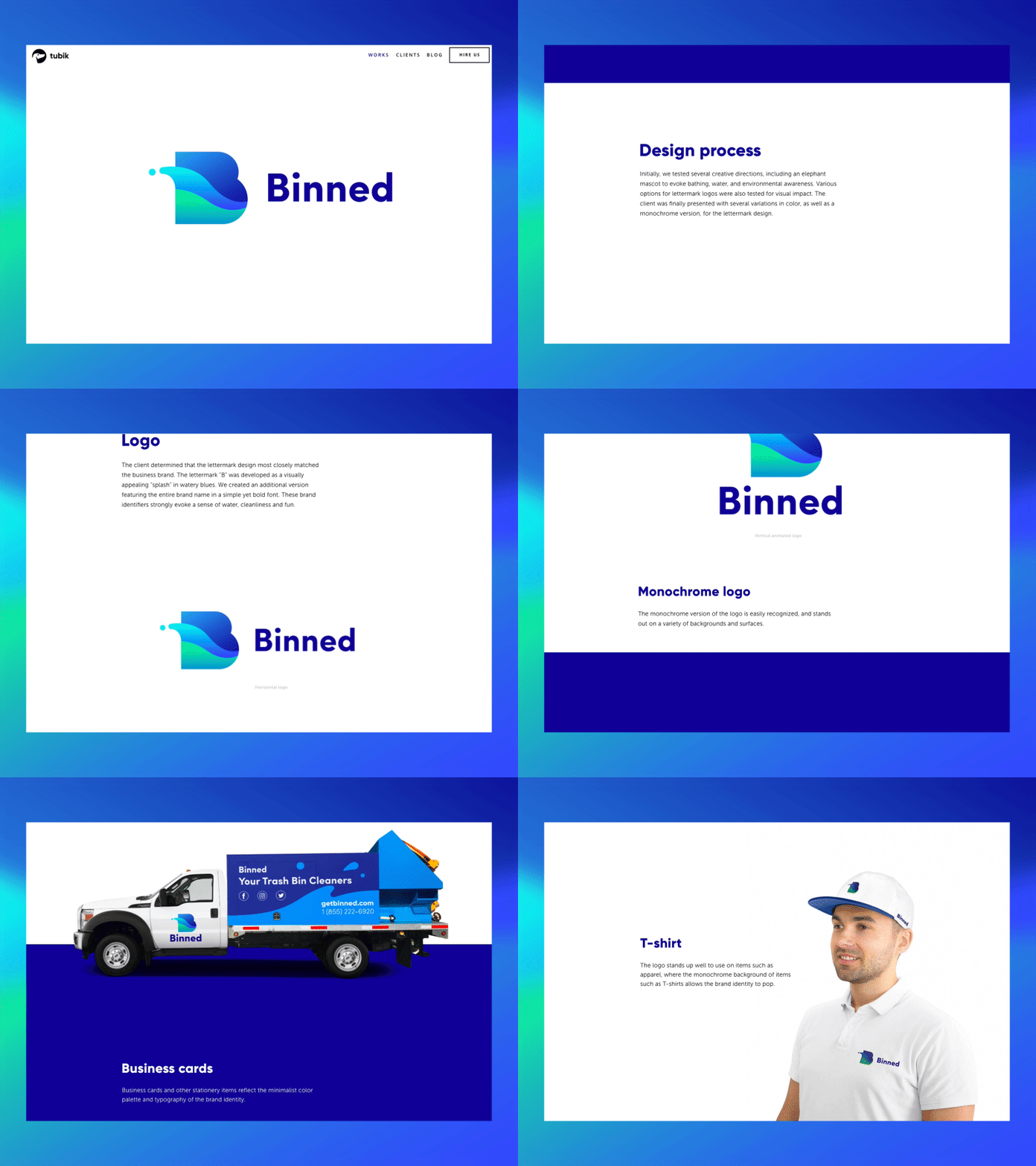
Corporate identity for Binned
Stage 2. Market and user research
When the goals are set and a company’s personality seems clear, designers go to the research work. This step is essential for all kinds of designer’s job, be it a logo or a mobile app. The research helps to immerse into the environment of the future brand and comprehend the peculiarities which may influence its success.
First goes the market research. Designers dig out the information about the market and potential competitors. It’s good to learn from someone’s experience be it good or bad. Having the necessary data experts can create a unique and efficient logo and build a brand identity that will stand out from the competition.
Designers and clients’ preferences should step aside to the needs of the target audience. A brand needs to make a good impression on its potential buyers or users to gain their trust. User research helps to get deeper into the preferences and psychological peculiarities of the target audience.
The design is not pure art. If you rely exceptionally on the sense of beauty and talent, there is a risk of failing the task. Research takes less time compared to doing the job over.
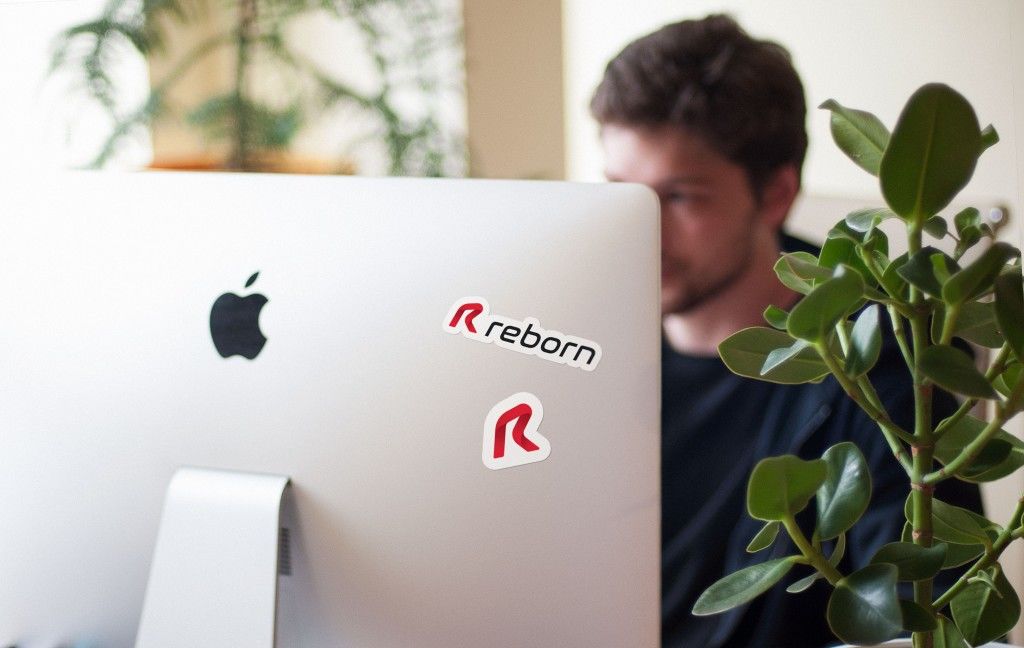
Stickers designed for Reborn
Stage 3. Logo design
Some people often mistake a logo for a brand but it is only one stage in the process of branding. However, it would be wrong to underestimate the role of logo design. It is the basic mark of brand identity, the most prominent symbol of brand image, and the foundation of an effective marketing strategy, enabling its connection with the target audience.
In our article Creative Stages of Efficient Logo Design, we’ve described essential stages of the creative process in logo design. They are:
- setting the task
- user research
- marketing research
- creative search
- choice of style direction
- choice of color palette
- testing in different sizes and environments
- creating a style guide setting right and wrong cases of logo use etc.
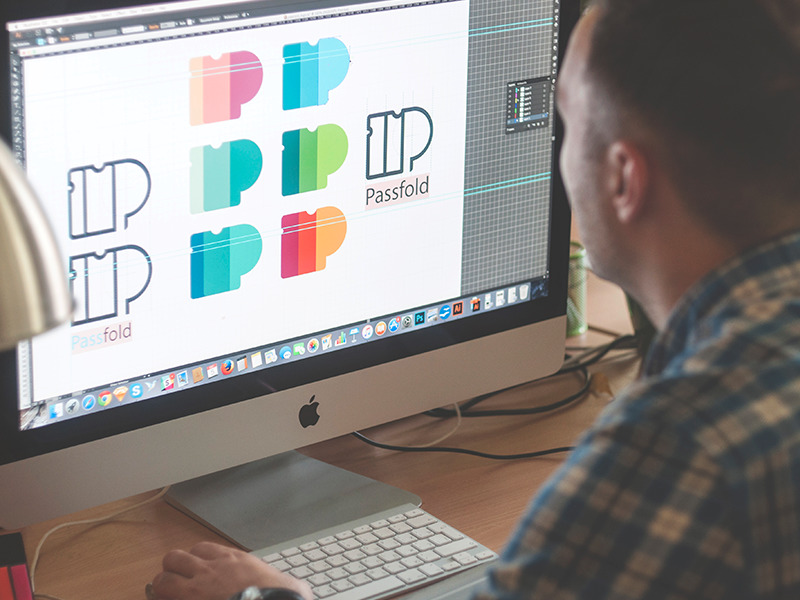
Logo design for Passfold
One of the aspects the research includes is exploring logos of the competitive companies. It helps to avoid unnecessary similarity with other logos in the sector and to make an original brand identity.
When all the core information is gathered, designers move to the more artistic stage – the creative process itself. Through various experiments, they choose the style direction and color palette that work best for a brand.
After the logo is complete, designers start the testing part. The thing is that not everything that looks good on a digital screen will be the same in a different environment or on a variety of surfaces. That’s why it’s vital to test the logo in all possible situations and placements to make sure there won’t be an unpleasant surprise.
Logo design plays a big part in branding, so designers are recommended to pay a big attention to its creative process. A well-thought-out logo is worth a time investment.

Logo animation for Binned
Stage 4. Visual elements of the brand
Logo design is not the only visual representation of a brand. Certainly, the major focus will always be on a logo, but there are also other elements deserving of attention, such as mascots and typography.
Companies often look for ways of personalizing a brand and designers have a solution. Mascots are custom-designed characters created to represent the brand in a quite symbolic way. They can be created as a part of a logo or exist as an individual brand element. Such characters can establish a connection with users as nothing else. A mascot serves as a tool for communication and interaction with users helping to transfer the message in an unusual manner. People start to see a mascot as a major representative of a company introducing them a product or a service. The efficient mascot guarantees recognizability and memorability to a brand and easily draws users’ attention.

Mascot design for Saily
Another visual element that contributes to brand identity is typography. Many logos are created via typography or contain fonts in them, but typography doesn’t end here. Banners, business cards, and correspondence that a company uses should also feature brand identity elements. You can also make fonts speak for your brand. Designers often create custom fonts for companies to stand out, even in small details. However, it’s not the only option. Experts may choose a combination of regular fonts that best suits a certain brand. This way, users will more easily remember a brand because of its consistency in every detail.
Logo design for Reborn
Stage 5. Corporate brand style
When the logo is ready, the color palette is chosen, and other visual elements are prepared, it’s time to unite them into a harmonious corporate style. It is required when a designer works on branding for service providers. Various attributes can make an item a branded one, depending on the type of company. There are some common brand items that are used by different companies:
Business card. Today, it’s a must-have in business communication, so it’s vital to ensure a business card properly represents a brand.
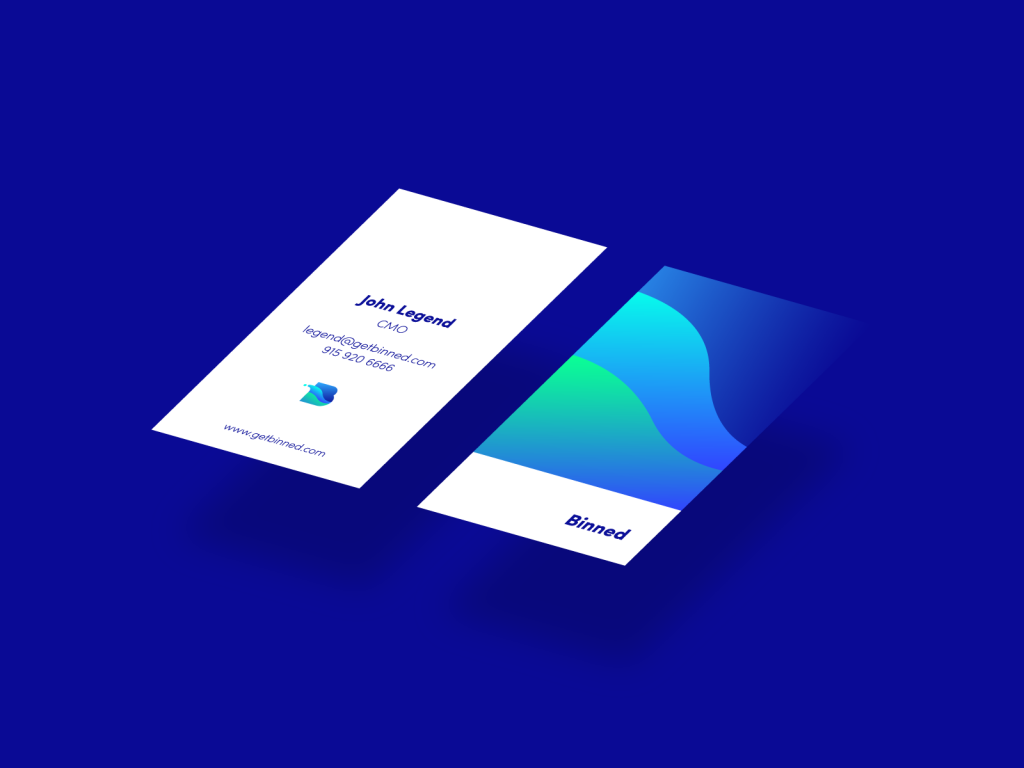
Business cards designed for Binned
Correspondence. Business communication always has a formal style. To show that a brand is a reliable partner and service provider, designers need to work on its correspondence presentation. Letterheads and envelopes need to include brand identity elements that convey a professional level.
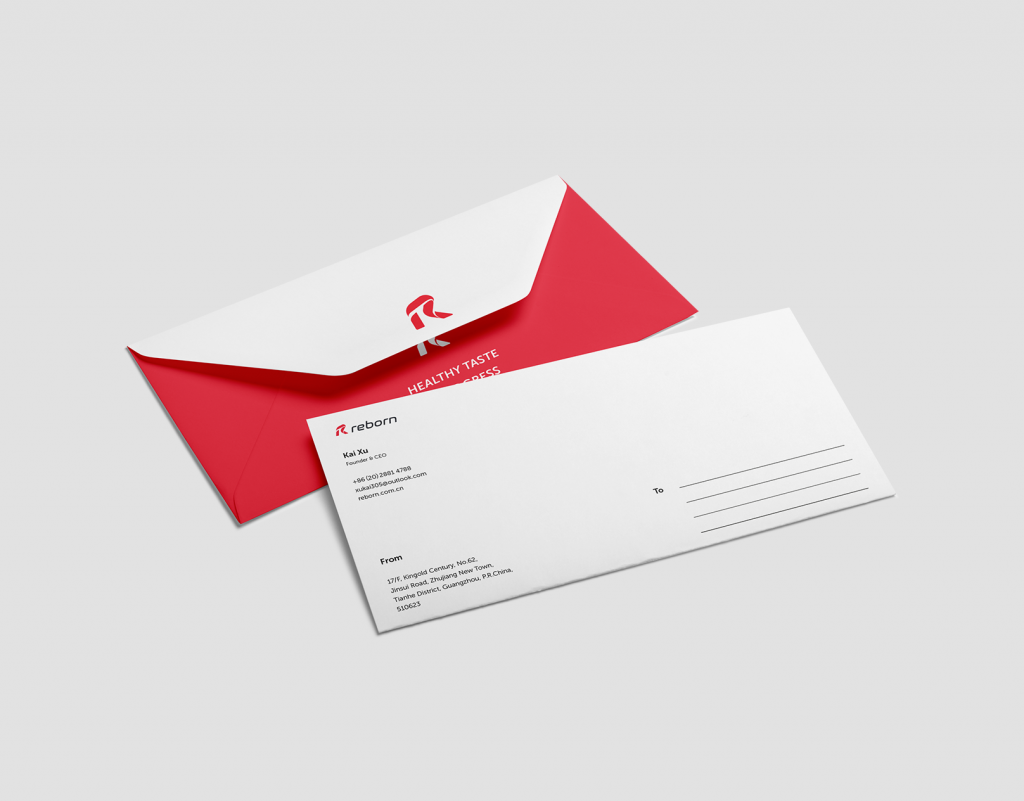
Envelope design for Reborn
Billboards and banners. They are a core part of branding and marketing so clients often ask designers to work on a creative idea for outdoor adverts and web banners.

Poster designed for Andre
Vehicle branding. Companies that provide product delivery need an effective vehicle decoration. Brand identity elements on company cars or trucks are an efficient way to promote outdoors.

Vehicle livery designed for Andre
T-shirt and hats. Clothes with brand marks bring the team spirit into a company so employers often take care of these attributes. Branded T-shirts and hats can be a good alternative to a uniform if it’s required, or they can be used as presents.
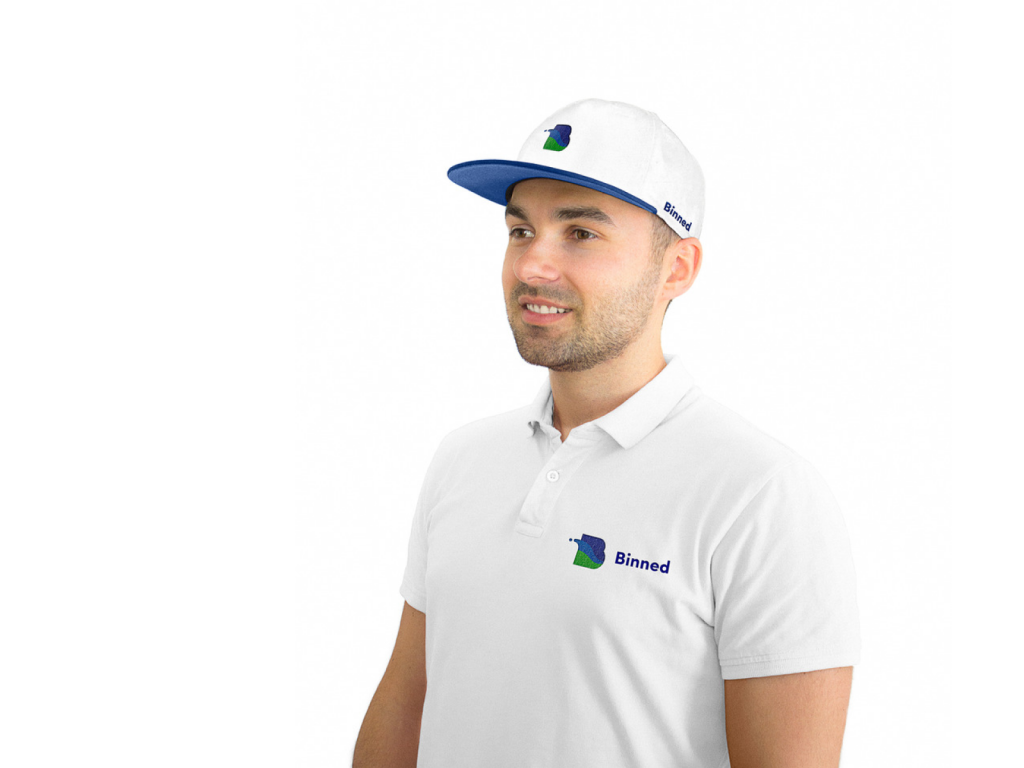
Branded clothes designed for Binned
Stage 6. A style guide
The work is done. The visual material is complete. The designer’s last task is to ensure clients use all assets properly. A style guide is a document that provides instructions on how to use graphics correctly and incorrectly for the brand. Traditionally, a style guide includes an explanation of the idea behind a logo, as well as a corporate color palette that can be used for different purposes. It can be helpful to demonstrate examples of incorrect usage to avoid poor visual performance.
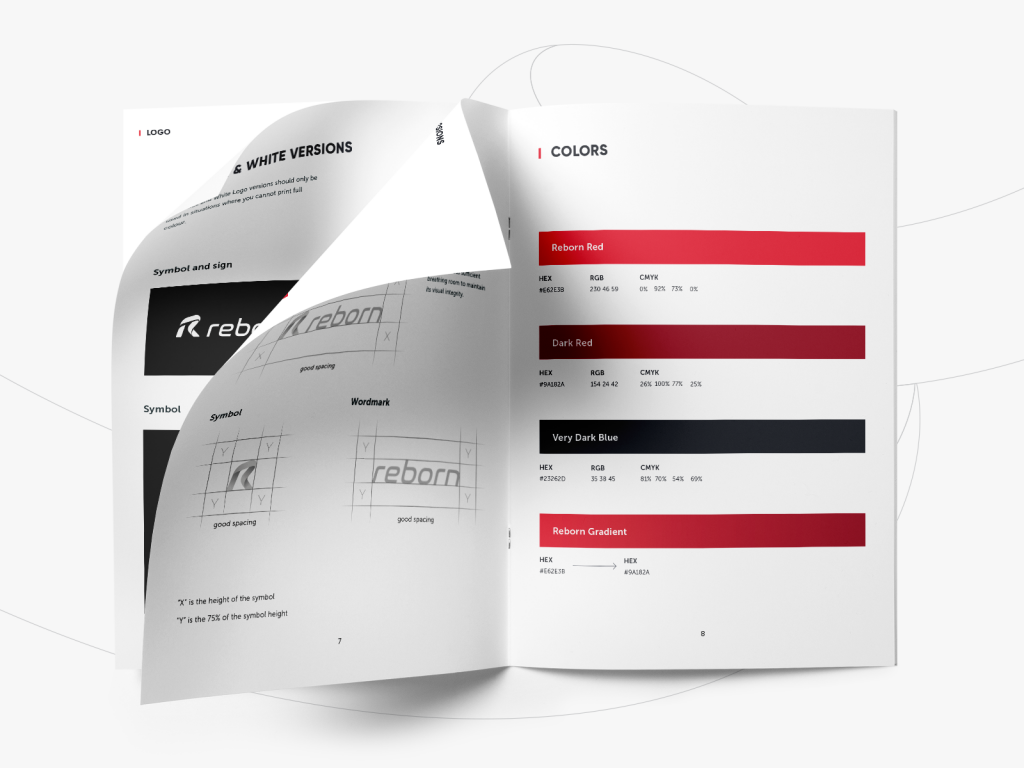
Styleguide for Reborn
As you can see, branding is a complex process. Each step should be well thought out, based on the target audience’s needs and the business goals.
Recommended reading
How to Use the Power of Mascots in Branding and UI Design
Animated Logos: Why, Where and How to Use
How Shape and Color Work in Logo Design: Practical Cases
Originally written for Tubik Blog
 https://design4users.com/6-creative-stages-of-design-for-branding/
2026-01-17
© by
Marina Yalanska
,
https://design4users.com/6-creative-stages-of-design-for-branding/
2026-01-17
© by
Marina Yalanska
,
- English
- Ukrainian