
Illustration Case Study: Step-by-Step Process for Winter Olympics Artwork
Illustration Case Study: Step-by-Step Process for Winter Olympics Artwork The illustrator from Tubik unveils a creative process for a complex digital illustration devoted to Winter Olympic Games: check the workflow and tips.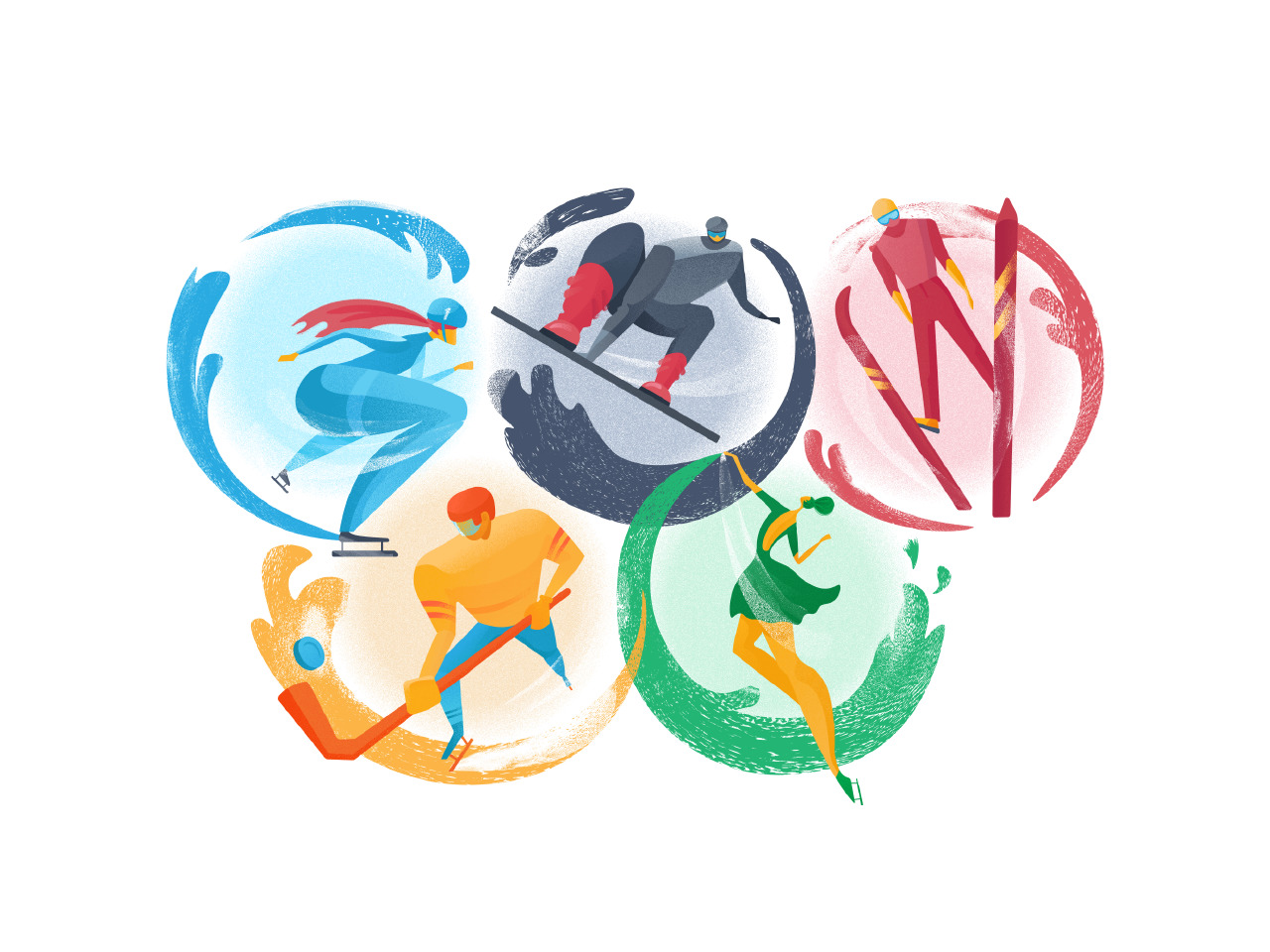
A creative process that designers set for digital illustration may vary in approaches, tools, and stages. Yet, it’s always interesting to see the real workflow through which illustrators go all the path from the idea to the final artwork. Today, we want to unveil such a step-by-step process for a digital illustration by Tubik designer Yaroslava Yatsuba. Earlier, she shared a set of helpful tips on flat illustration design, on how to catch your original style, without losing harmony and balance. This time, let’s move on to the work-in-progress case study.
Having explored the work styles and approaches, Yaroslava says that, with long-term practice, both traditional and digital artists develop their own routines and the number of creative stages. In this post, she shares her process, which mostly has 5 steps. Here ,it’s presented by the example of her fresh artwork reflecting the theme of the Winter Olympic Games.
Stage 1: Sketching by Hand
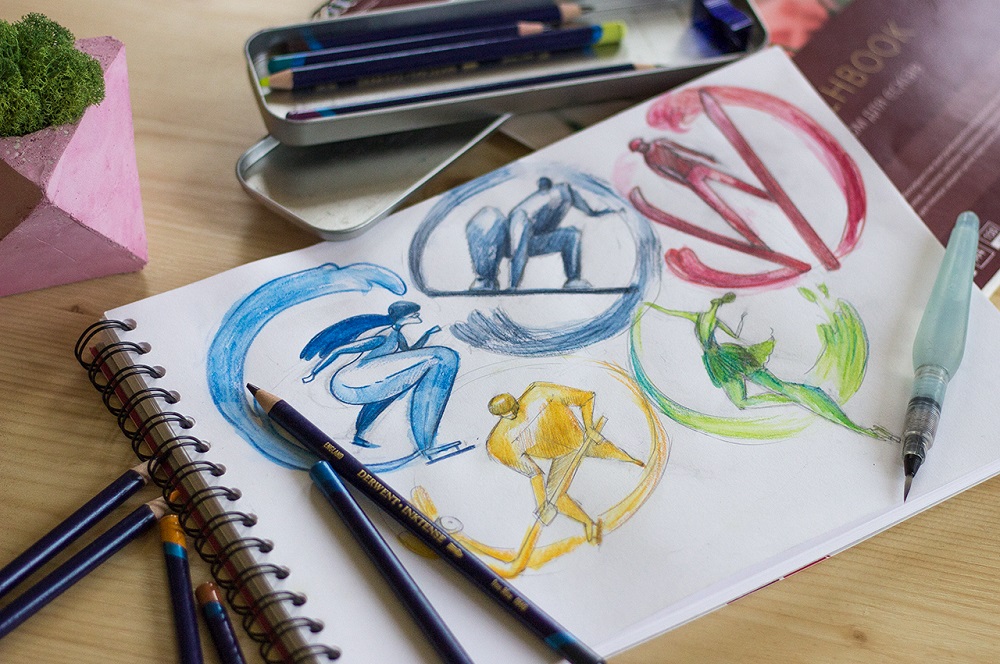
The first stage is devoted to the search for composition, dimensions, characters, and their interactions. It is done by hand sketching. If this sketch isn’t going to be shown to clients, don’t try to go deep into all the details – strive for the level of fidelity that is clear to you personally and save the ideas.
Stage 2: Turning a Traditional Sketch into Digital
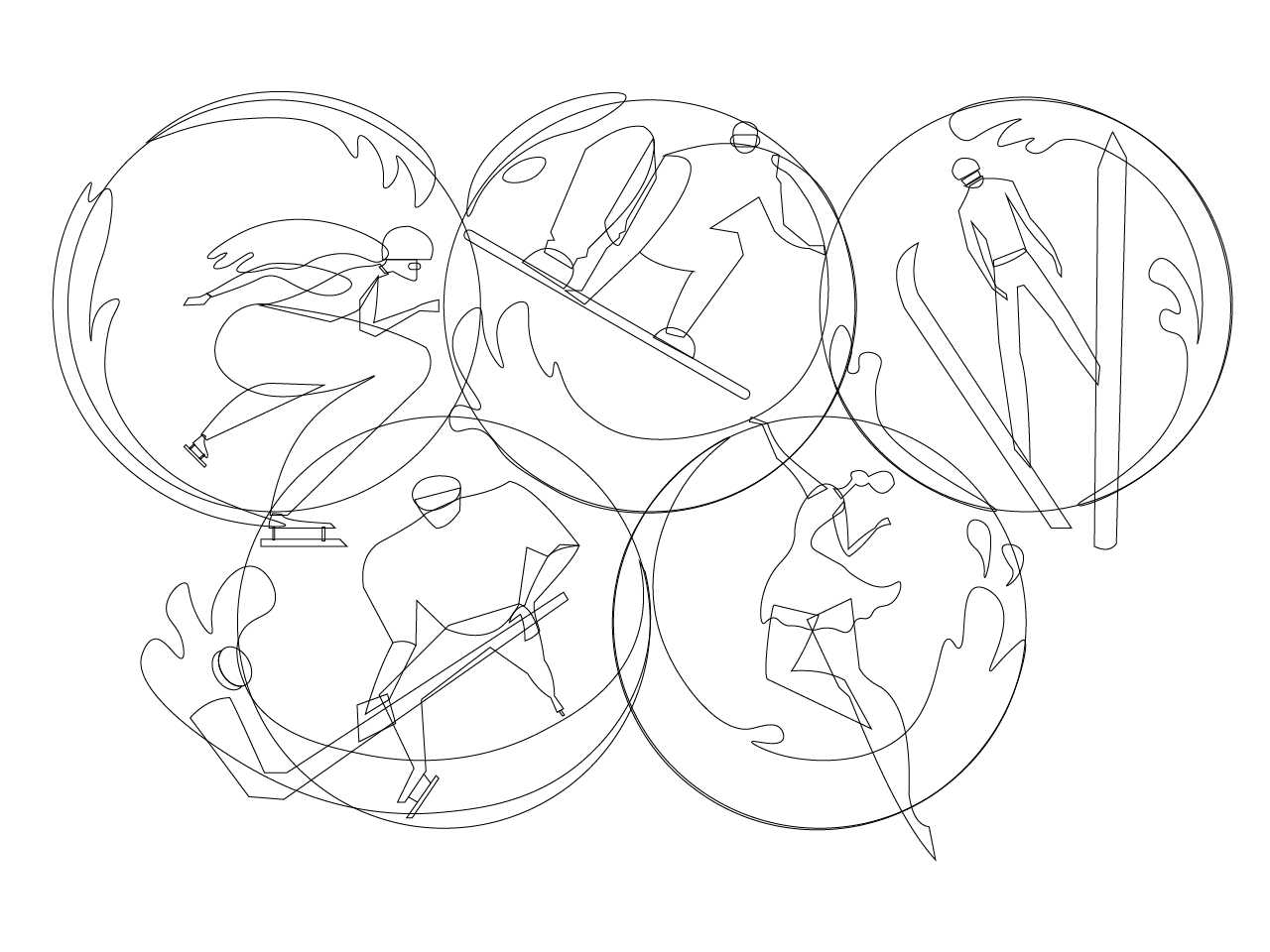
The second stage transforms the idea from traditional to digital drawing. Yaroslava uses the scanned or photographed sketch as a base in the Adobe Illustrator. Then she starts to outline the sketch using Pen Tool if lines are strict and Curvative Tool in case of smooth lines. At this stage, she draws the main dimensions without details as well as moves bodies and structures in search of a nice composition. This is the phase when the frame of the illustration is created.
Stage 3: Color Choice
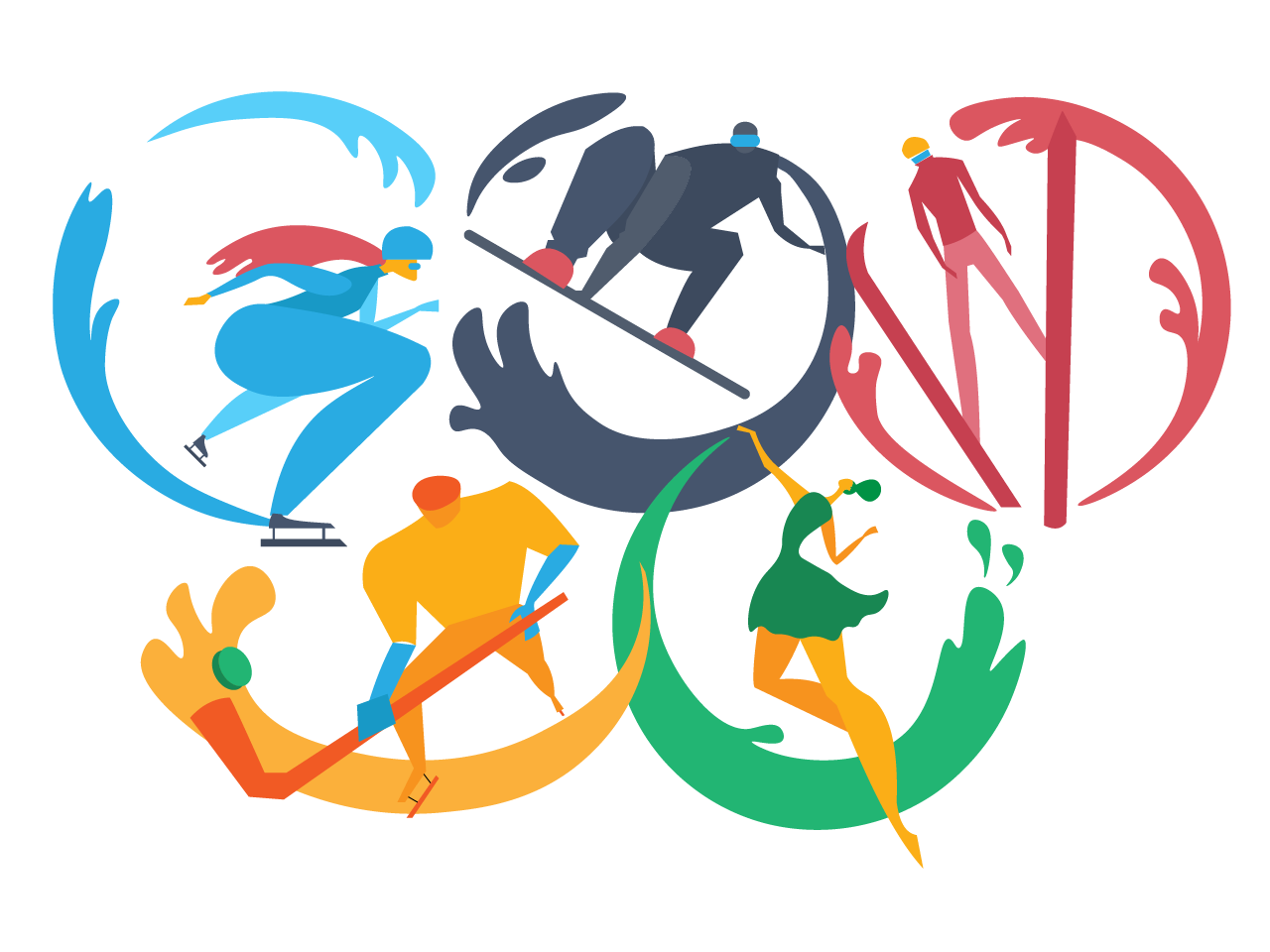
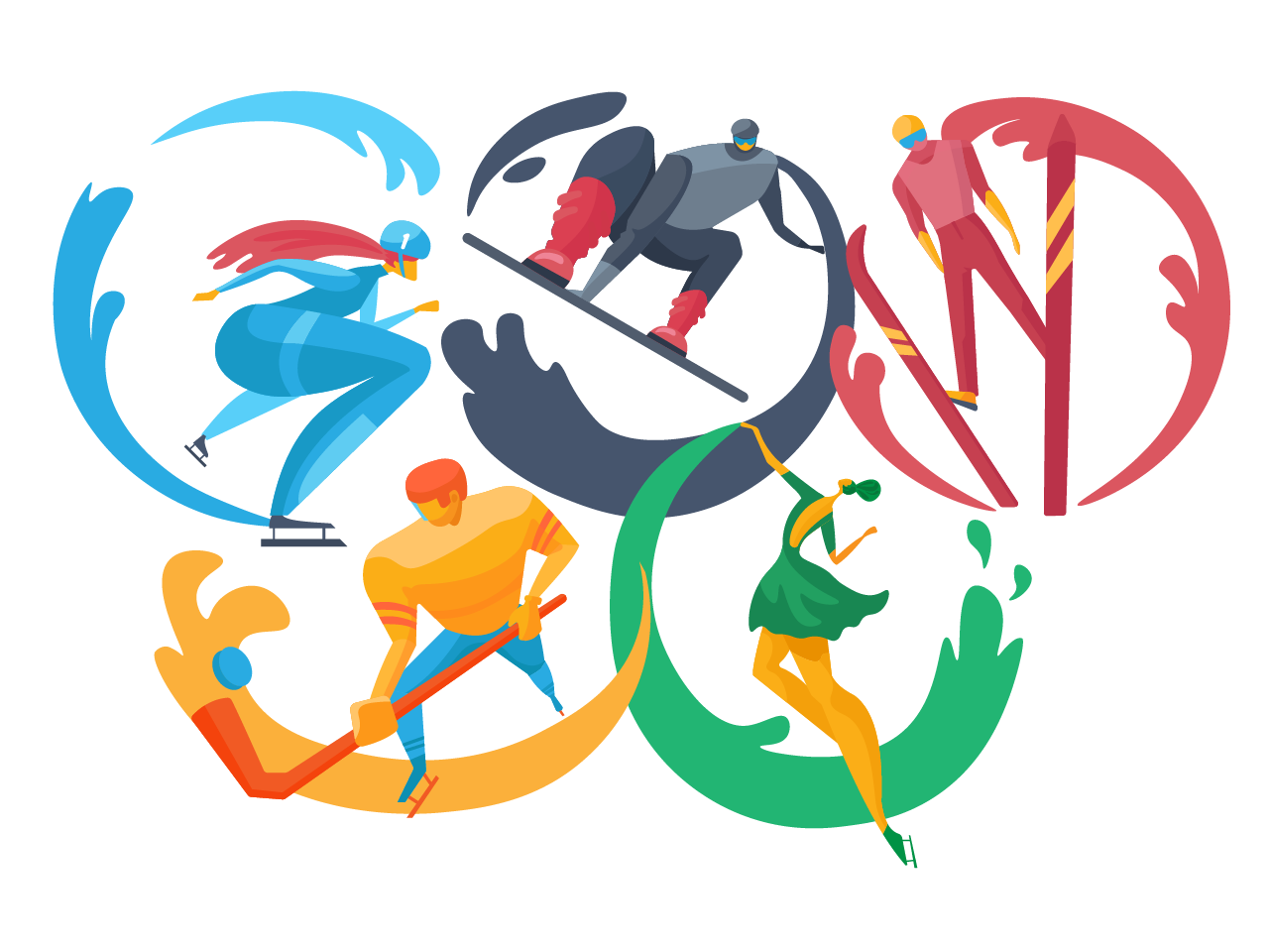
The third stage is all about color. The designer has to decide on the color palette and combinations. In this particular illustration, the choice was not so hard: she decided to apply the colors of the symbolic Olympic rings. Each of them served as the basis for a particular ring with the character inscribed on it.
Stage 4: Dimensions and Details
The next stage is devoted to working out details and adding volume. The dimensions and shapes are getting clearer and sharper.
Stage 5. Textures and Dynamics
At the final stage, the designer adds the textures. They breathe life into the images. In this illustration, textures allowed for setting the effect of speed, dynamics, as well as visual prompts of the winter season.
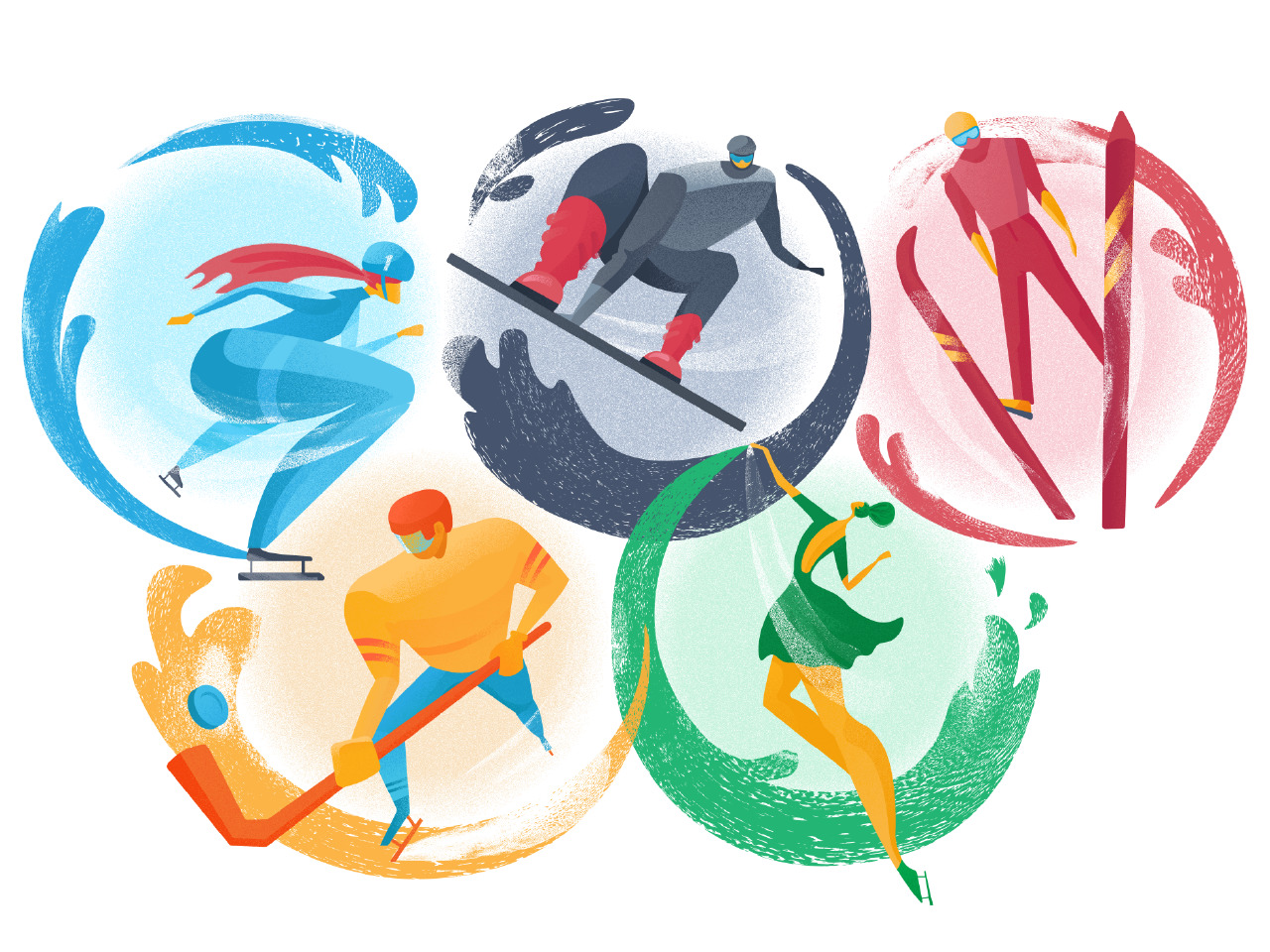
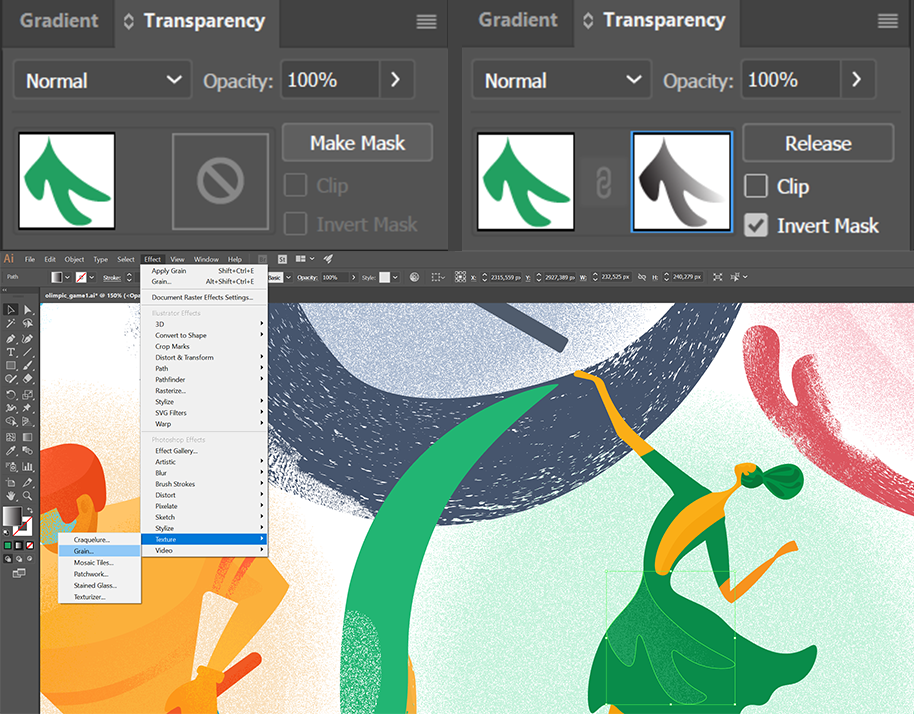
In most cases, the designer adds textures with masks. She creates a mask and copies there a black-and-white gradient of the element to which the texture is applied. Then she applies the Grain effect. The other variant is painting inside the mask with the texture brush of white, black or gray color depending on the needed effect.
In the end, she scales the illustration, provides a reflection for a holistic view, and makes small alterations if needed. The illustration is ready!
Final Tip
During the illustration process, the designer follows the principle of covering the entire illustration at every stage. All the parts of the illustration have to be equally worked-out at the level required by the specific stage before moving to the next step. This approach helps to avoid the situation when some parts are developed in the slightest details while the others feature the lack of patience and persistence. Harmony and consistency are the artist’s best friends.

Check the earlier article to see more illustrations by Yaroslava and read a bunch of useful tips for graphic designers.
Useful Case Studies
For graphic designers interested in seeing more practical case studies with creative flows, we have collected a set of articles.
Moonworkers. Digital Illustrations About Film Production
Dicey. Logo and Mascot Design for Party Game
MYWONY. Storytelling with Brand Intro Design
10 Reasons to Apply Illustrations in User Interfaces
Step-by-Step Process for Storytelling Illustration Set
5 Basic Types of Images in Web Design
How To Use Hero Images in Web Design
Originally published in Tubik Blog
 https://design4users.com/illustration-winter-olympic-games/
2026-01-18
© by
Marina Yalanska
,
https://design4users.com/illustration-winter-olympic-games/
2026-01-18
© by
Marina Yalanska
,
- English
- Ukrainian